CASE STUDY – Planty
planty
WIP: Mobile app for shopping, planning & tending your garden
Context
Client: planty – self-initiated
Scope: branding, content direction, UX research, UX/UI design, usability testing
Goals & Metrics
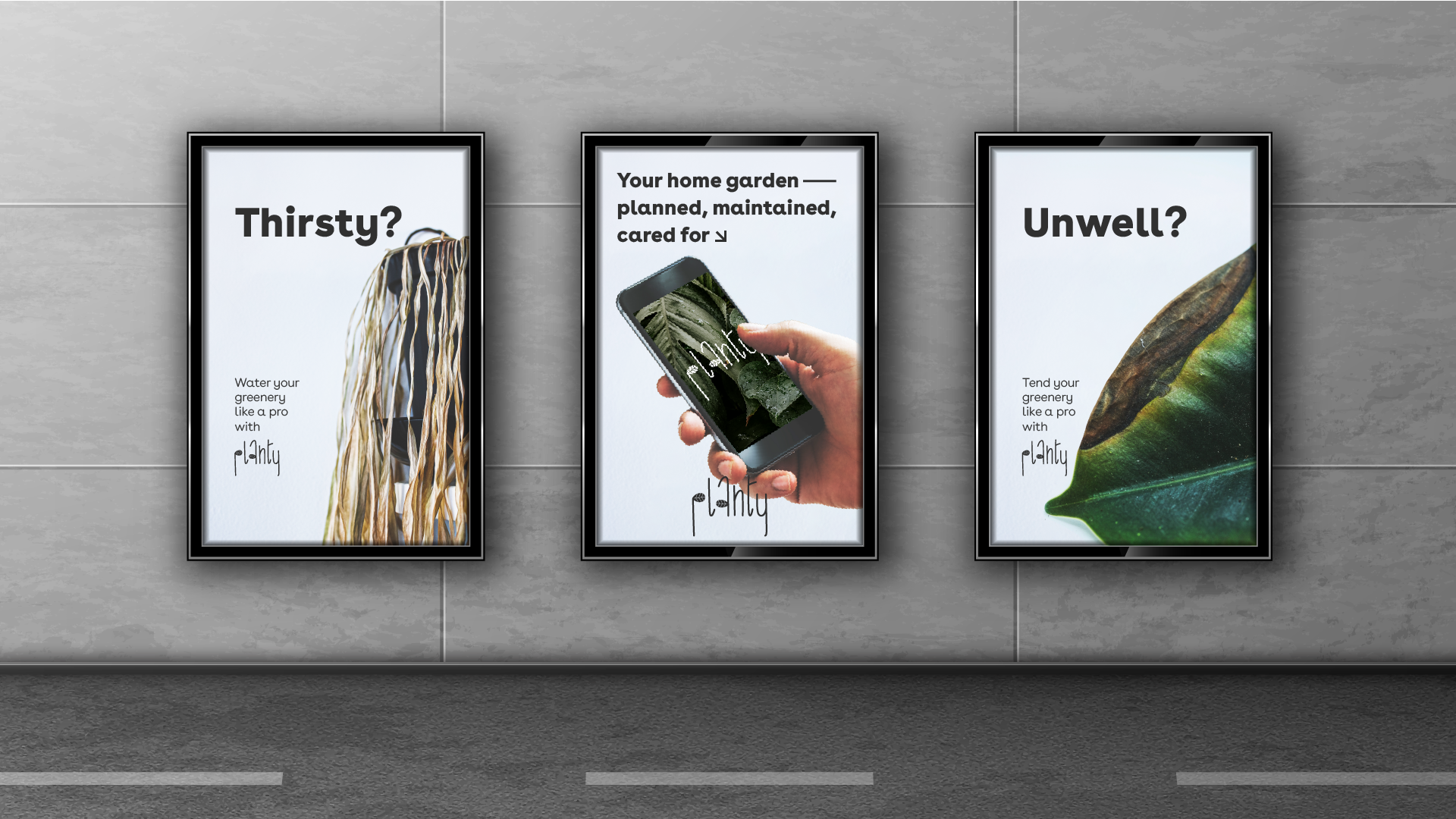
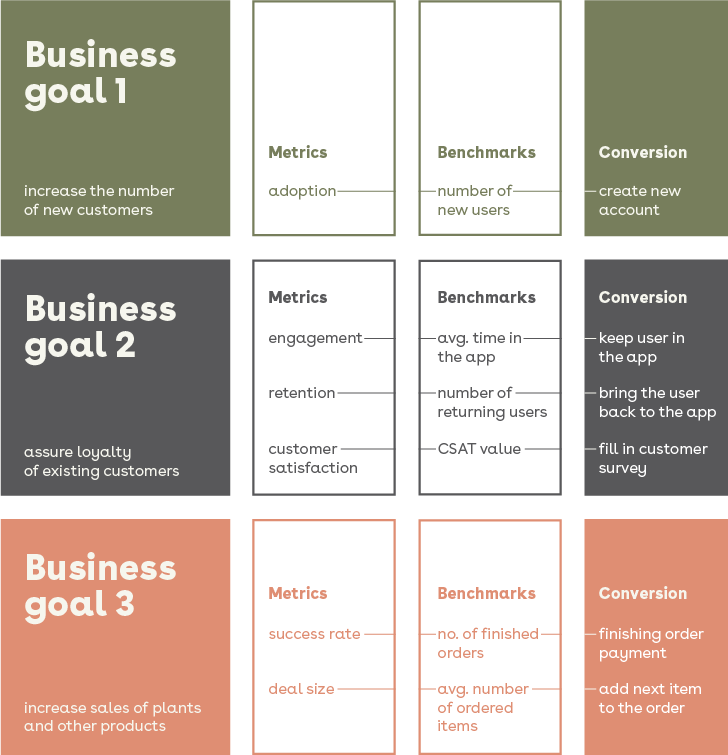
The aim of this project is to gain new clients and keep existing ones by attracting their attention with access to first-hand expert knowledge and by enhancing their experience with plant tending. Given that the showcased product is a new release, the initial assessment is expected to establish benchmarks for its ongoing evolution.
Market analysis
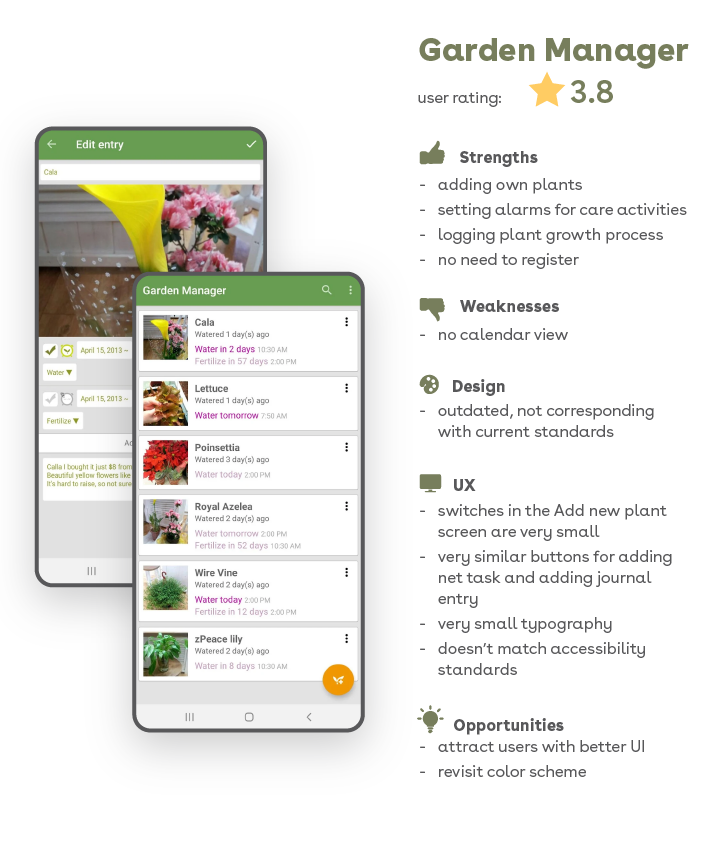
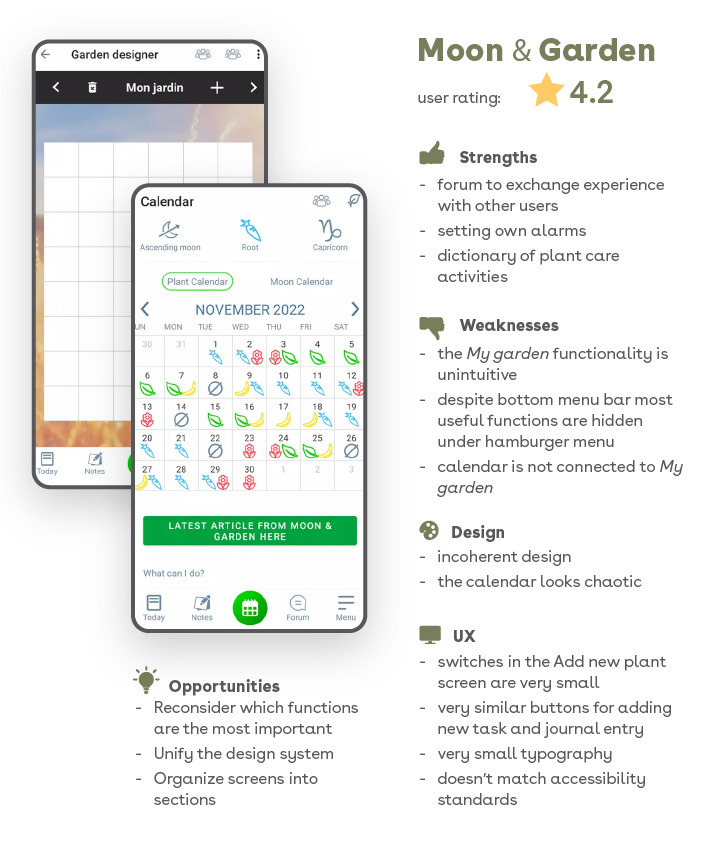
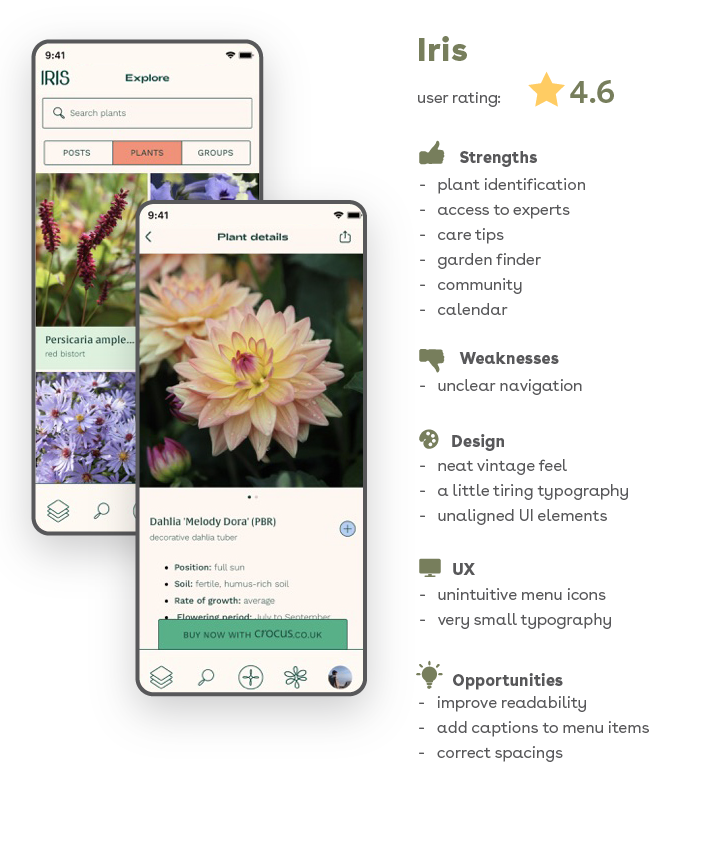
I analyzed the four most frequently recommended plant management apps in the market. For each of them, I identified strengths, weaknesses, and several other design-related aspects. Surprisingly, the app that seemed the most promising—MyGarden by Gardena—appeared to be unavailable in Poland. Due to this reason and to conserve space, I won’t be presenting it in this case study.
User research
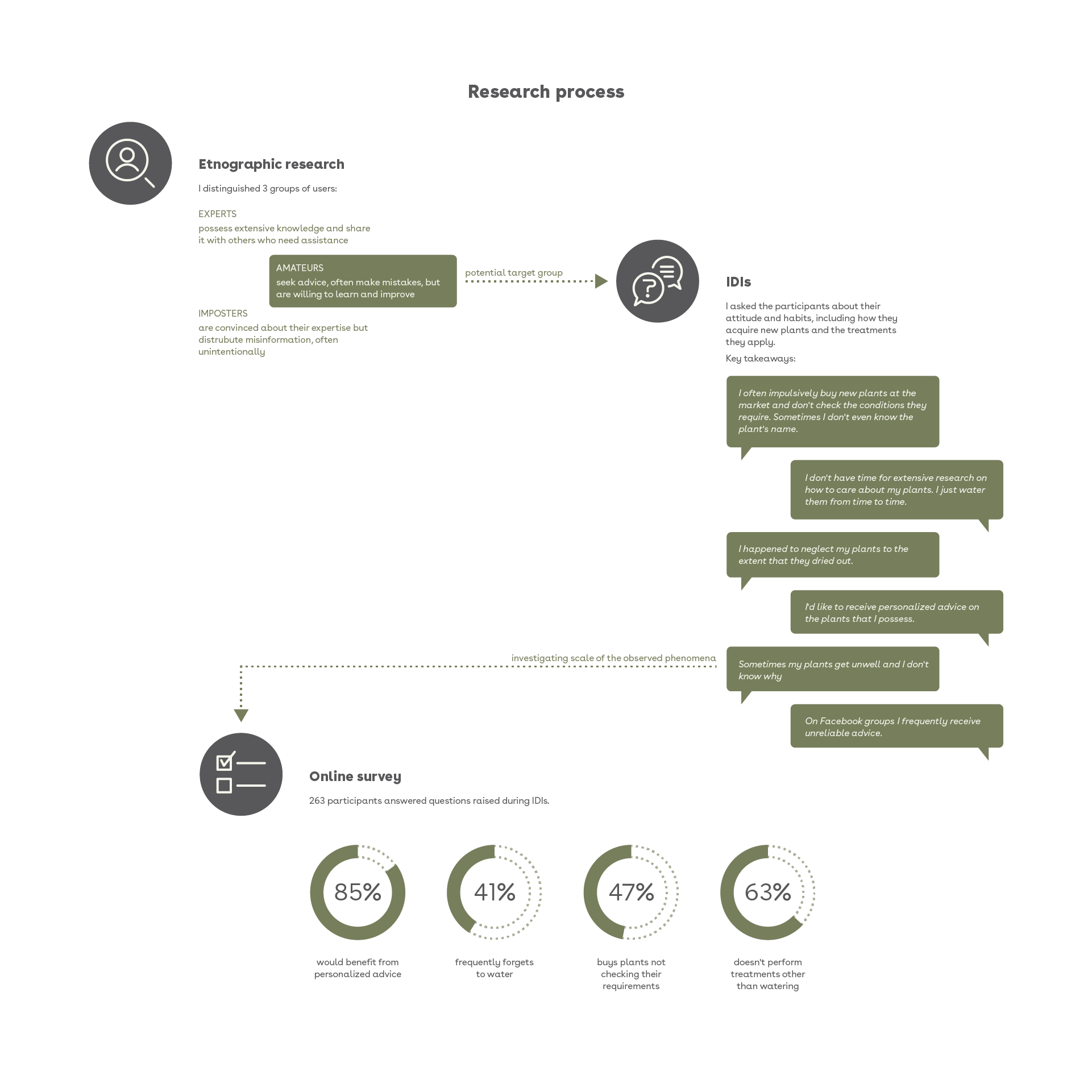
Given that I didn’t have access to any customer stats, to gather user requirements, I conducted a three-stage research. Initially, I generated hypotheses by observing the online behaviors of tech-savvy plant enthusiasts, delving into Facebook groups, forums, and conducting real-world discussions with friends. To glean a more profound understanding, I interviewed 10 users, who I selected based on their activity on groups. I asked them about their habits and necessities. Lastly, in order to gauge the extent of the identified trends, I conducted an online survey.
Target group
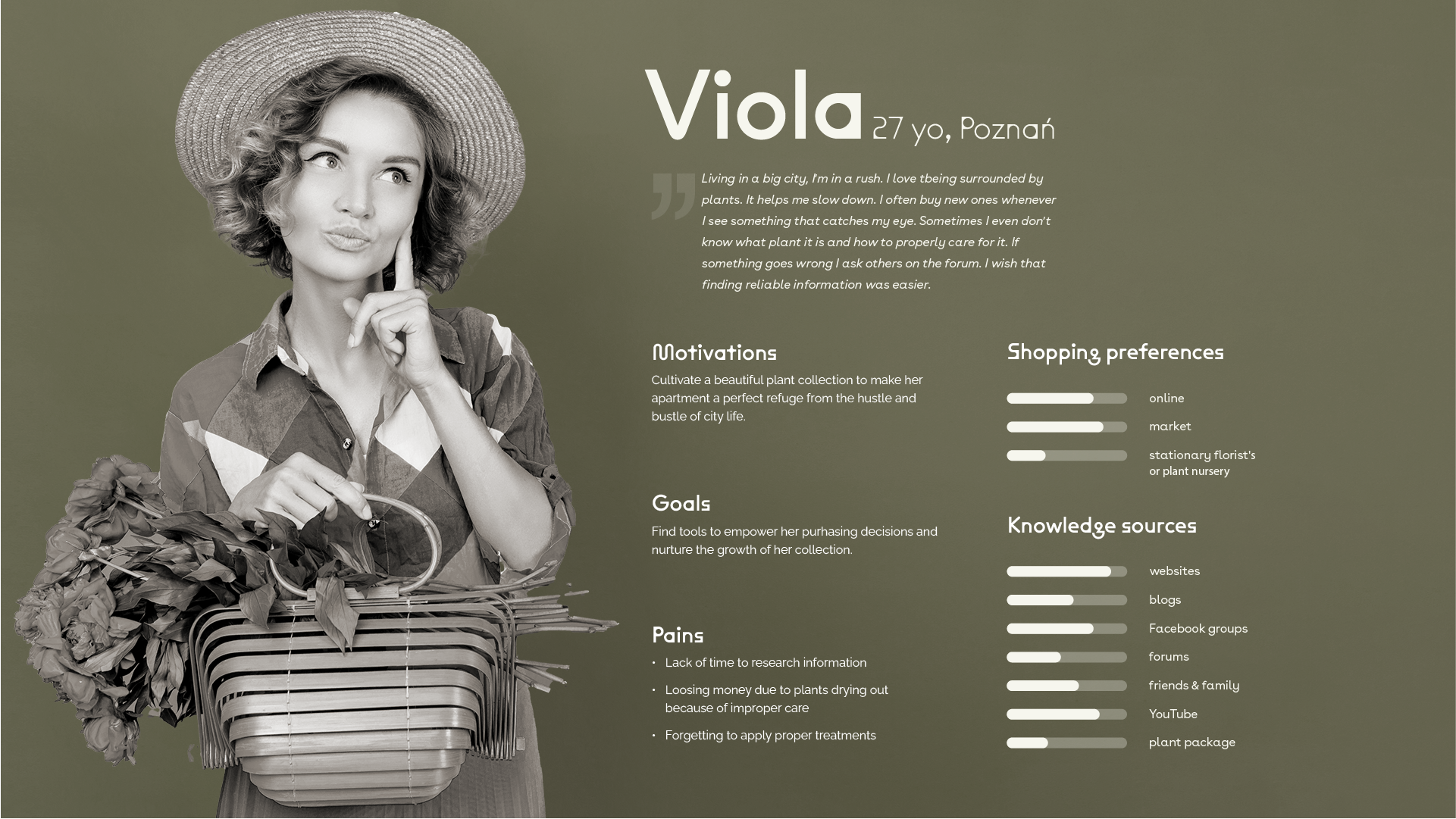
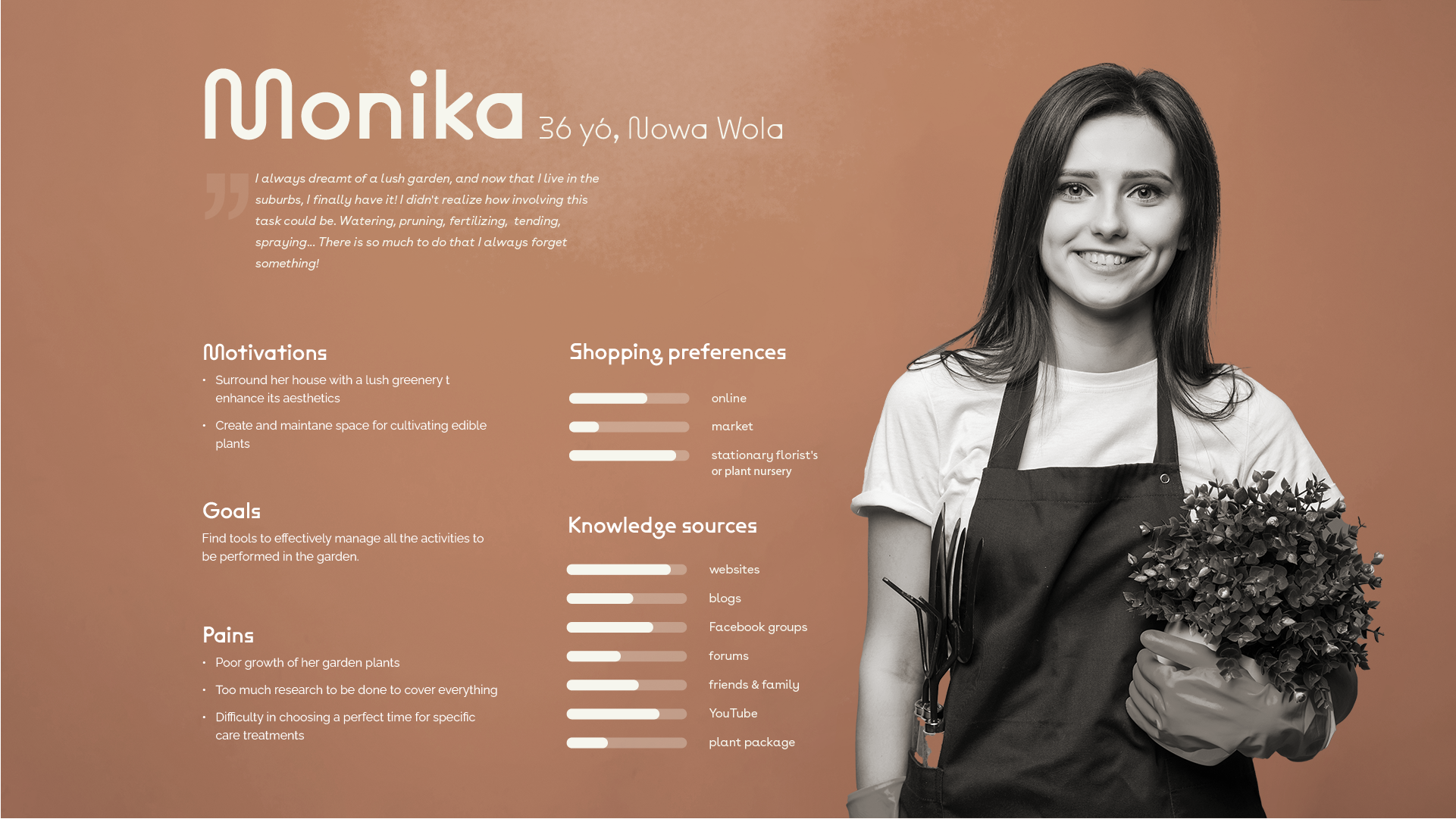
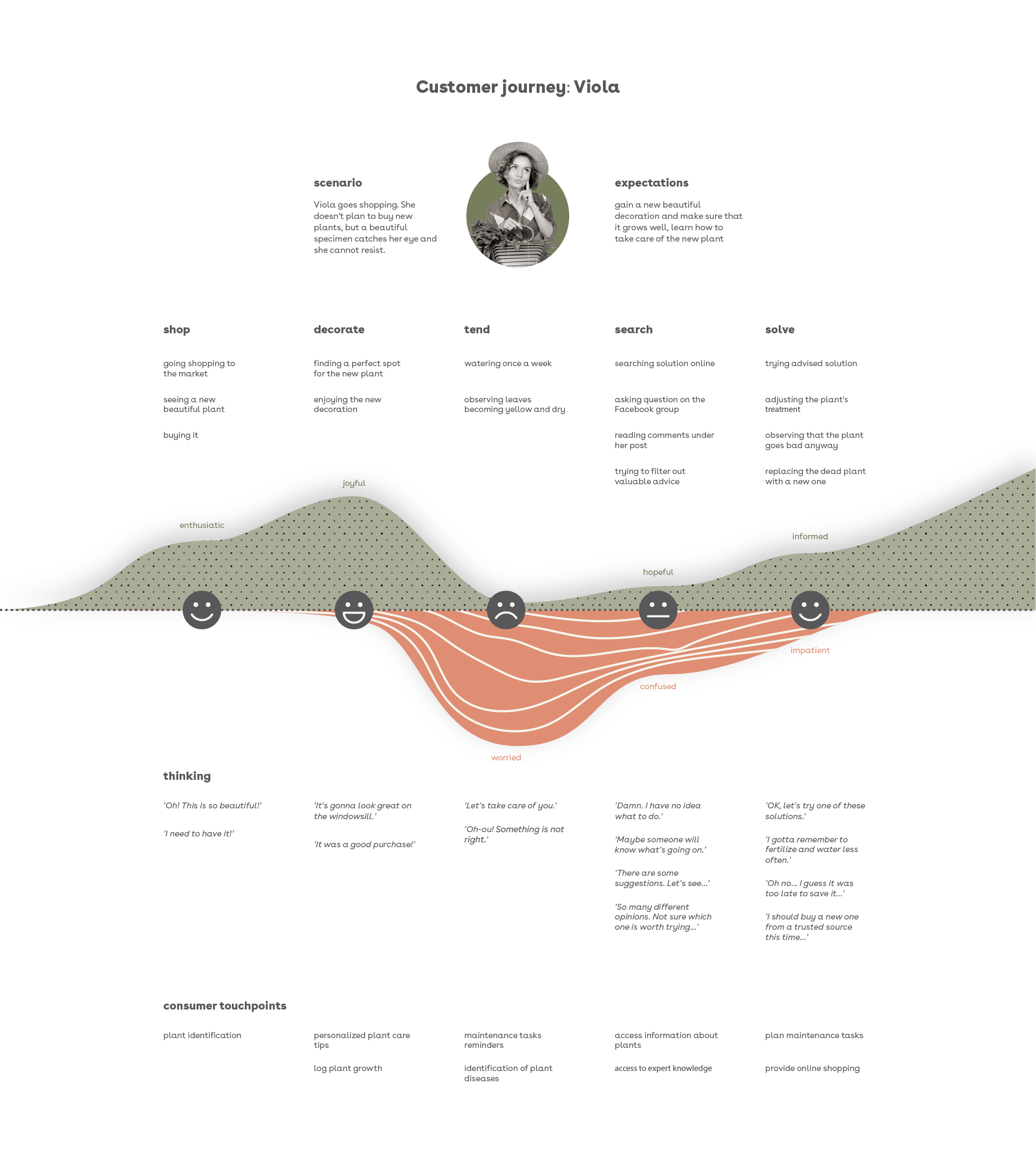
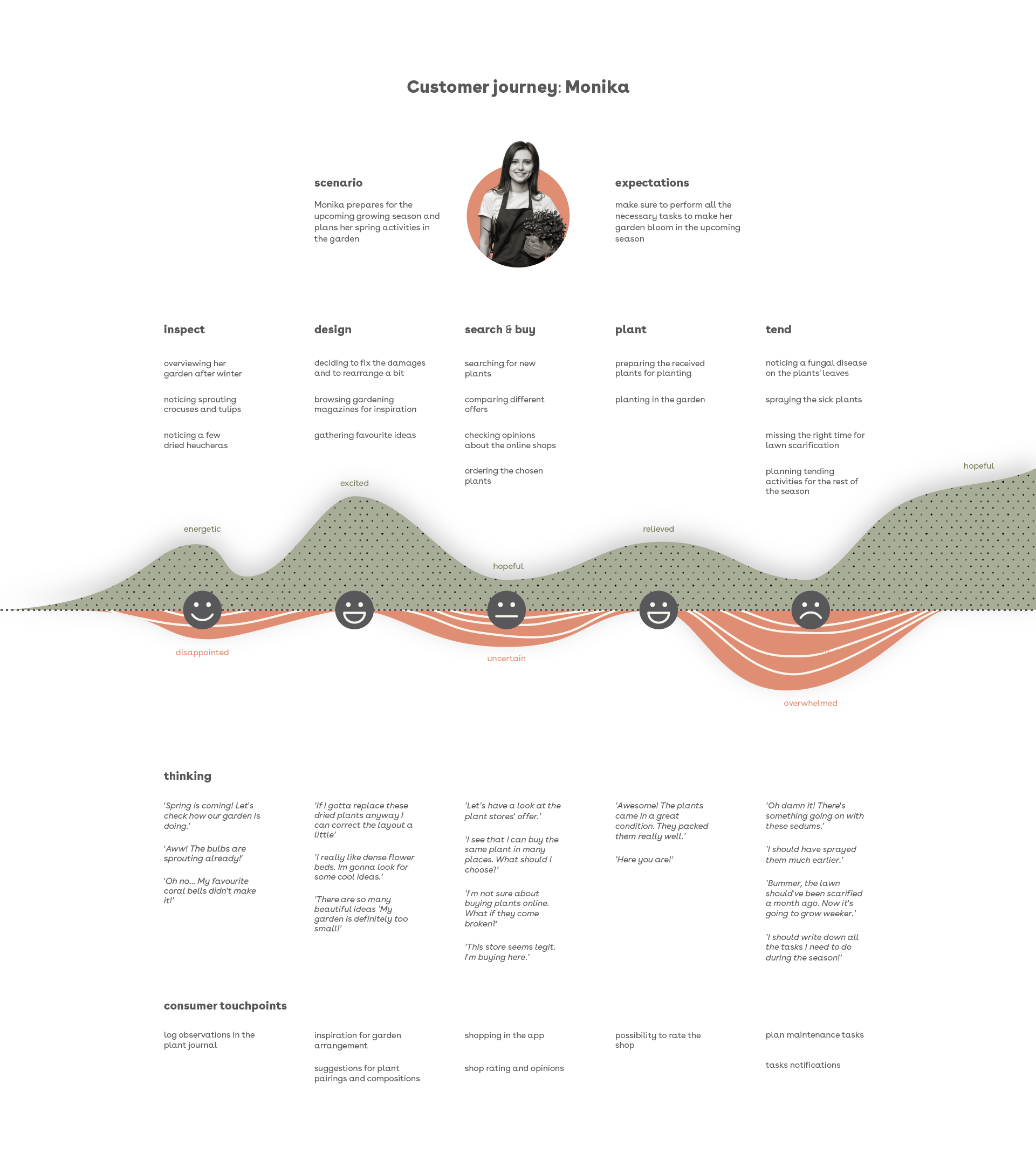
From the user research I learned that the target group for the developed product consists primarily of young women residing in the city or its nearby areas. They are ambitious about cultivating a lush plant collection or garden but encounter challenges in maintaining it effectively. I summarized my findings by constructing two primary personas.
Problem statement
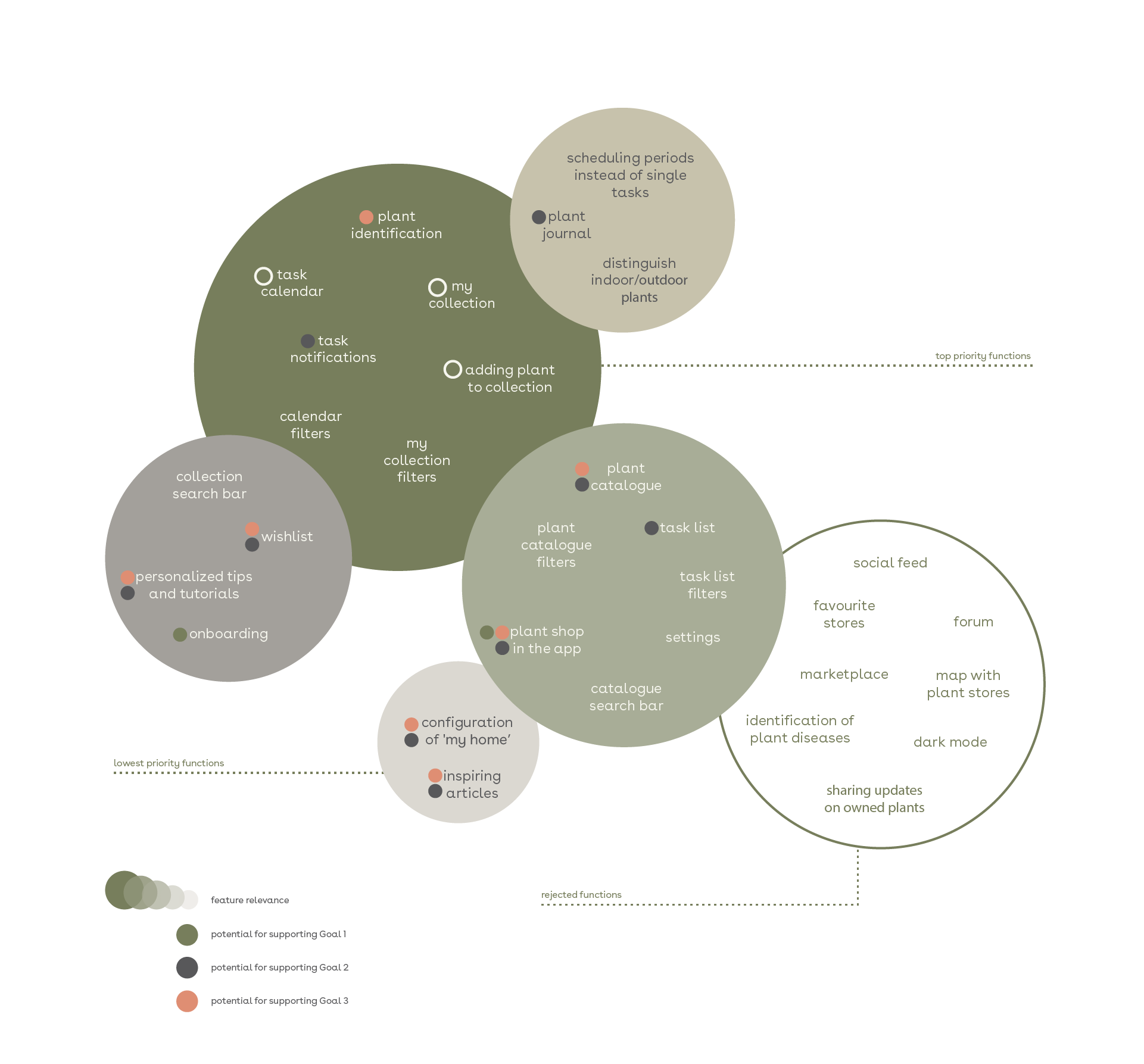
The rush of life, lack of time, and the challenge of discerning expert knowledge in the midst of information overload all underscore the potential benefits of an app like Planty for the target audience. In the subsequent phase, I shifted my attention towards generating and prioritizing potential app functionalities. I did that by asking my research group what features would convince them to use a plant managing app. They could both select from predefined options as well as suggest their own ideas. The diagram below showcases ideas according to their popularity. The size of a bubble indicates users’ interest in particular features.
Information architecture
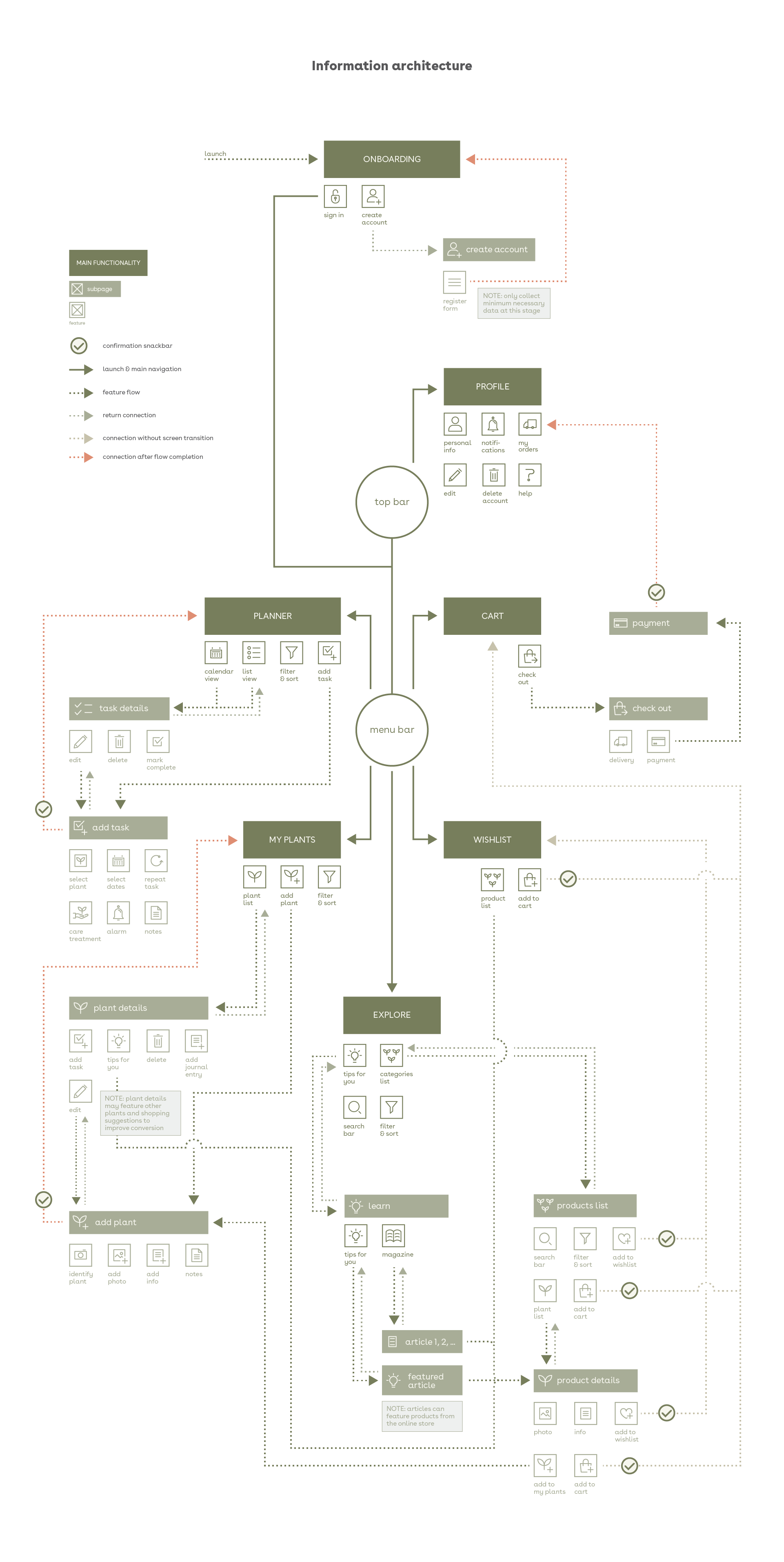
To construct the app’s information architecture, I conducted a tree testing and card sorting workshop, during which participants engaged with the aforementioned functional concepts.
User flows
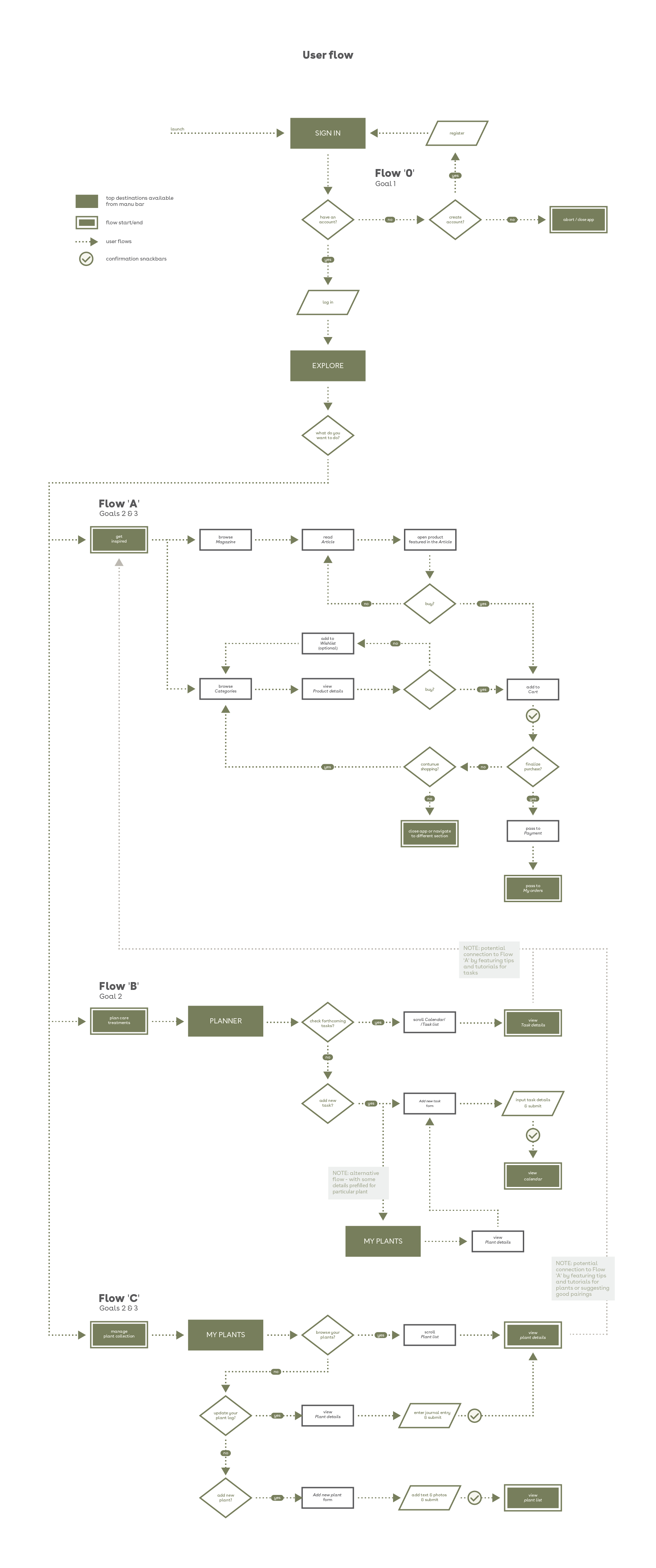
In the diagram below, I illustrate the primary user flows within the app. To ensure a focus on key user tasks and maintain readability, I omitted secondary scenarios like data editing or deletion.
Branding
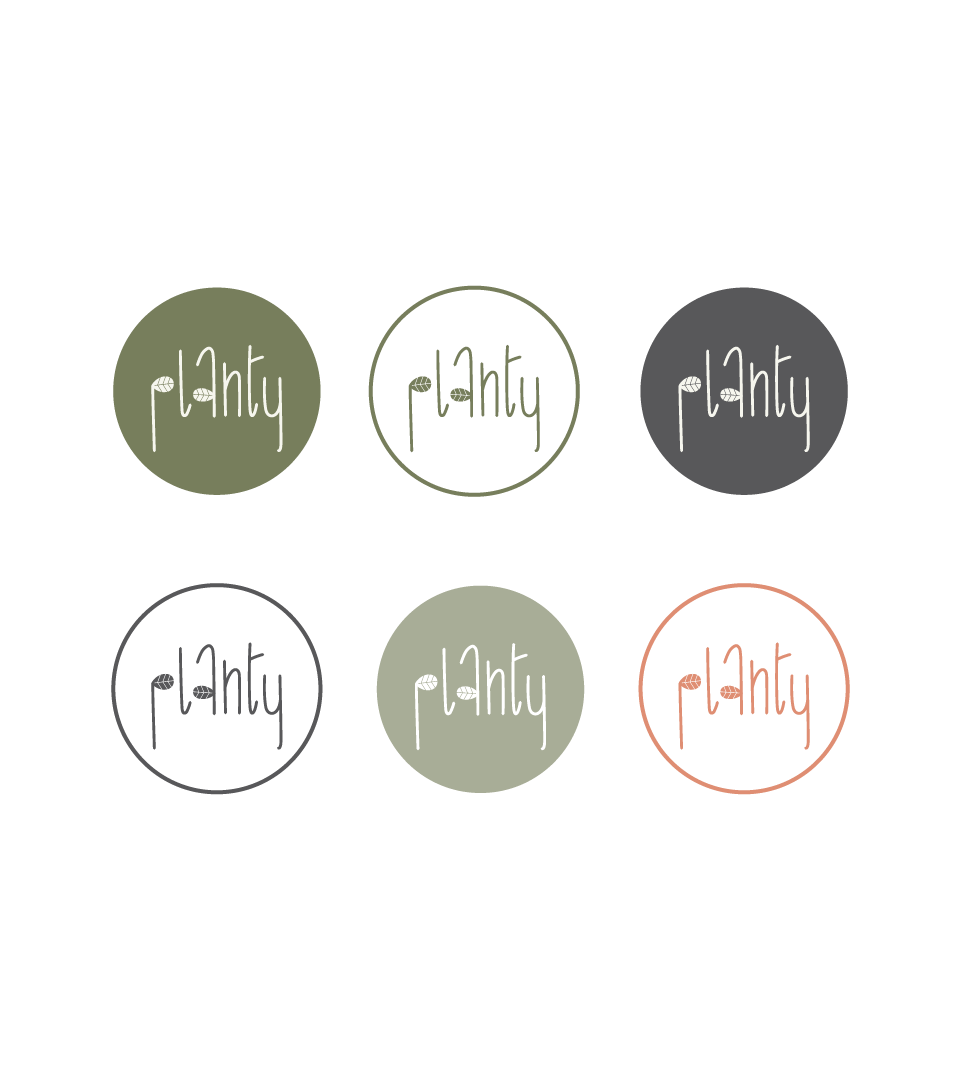
While designing the app’s branding, my aim was to evoke a serene and tranquil atmosphere while establishing a strong connection with the idea of natural, vibrant growth.